
How Crypto Wallet Drainers Work: Risks and Safety Tips
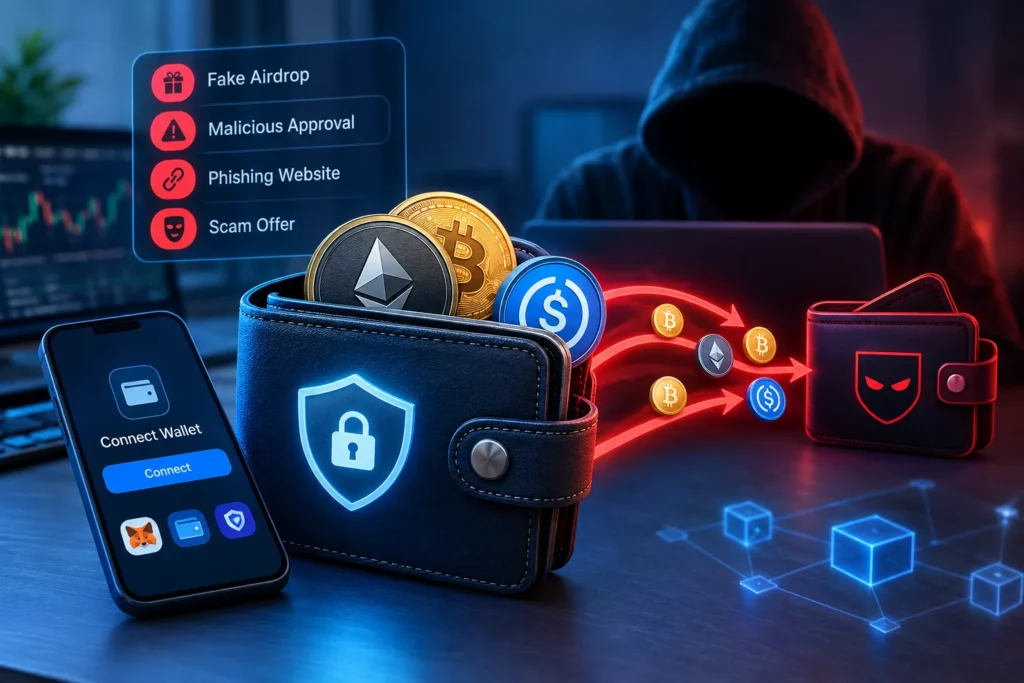
Cryptocurrency offers users greater control over their digital assets, but that control also comes with security responsibilities. One of the threats crypto holders should understand is the crypto wallet drainer, a type of scam designed to trick users into authorizing actions that allow criminals to steal their assets.
Unlike traditional account theft, a wallet drainer does not always require an attacker to discover a password or steal a private key. Instead, criminals may use fake websites, deceptive airdrop campaigns, malicious token approvals, or misleading digital signatures to obtain permission to move assets.
Understanding how crypto wallet drainers work can help you recognize suspicious requests before approving them. This guide explains the common attack methods, warning signs, prevention strategies, and practical steps to take if you suspect your wallet has been compromised.
What Is a Crypto Wallet Drainer?
A crypto wallet drainer is a malicious tool or phishing setup designed to steal cryptocurrency or other blockchain-based assets by exploiting user trust and wallet permissions.
These scams frequently imitate legitimate cryptocurrency projects, NFT marketplaces, token launches, decentralized applications, or promotional campaigns. A victim may be encouraged to connect a wallet to claim a reward, mint an NFT, verify eligibility, or access an exclusive opportunity.
The danger often appears when the website requests a transaction or digital signature that grants unintended permissions. If the user approves the request, the attacker may gain the ability to transfer certain tokens or NFTs without requiring another approval for each transfer.
Crypto wallet drainers can target different blockchain networks and asset types. Their exact capabilities depend on the permissions granted, the wallet involved, and the underlying smart contract or signature mechanism.
An important distinction: connecting a wallet to a website is not automatically the same as authorizing a transfer. The greatest danger often comes from signing a malicious transaction, granting excessive token allowances, or approving a deceptive message.
How Crypto Wallet Drainers Work
Although individual scams vary, many follow a similar sequence. Recognizing these stages makes it easier to identify a threat before funds are lost.
1. Attackers Create a Convincing Offer
The process often begins with a fake promotion designed to attract cryptocurrency users.
Examples include a supposedly free token airdrop, an NFT minting event, a limited-time reward, or a message claiming that a wallet must be verified to receive benefits.
Scammers may copy a legitimate project’s branding, website design, social media posts, and terminology. Some distribute links through direct messages, email, online communities, or compromised social media accounts.
The objective is to create enough urgency or excitement that users stop checking the source.
2. Victims Visit a Fraudulent Website
The promotional message directs users to a website controlled by the attacker or to a compromised page.
The website may resemble a legitimate platform, making the difference difficult to notice at first glance. A slightly altered domain name, misleading subdomain, or unfamiliar link can be the only obvious warning.
Some fraudulent pages also display fake wallet connection buttons, countdown timers, reward balances, or eligibility checks.
Before connecting a wallet, users should independently verify the project’s official website and confirm that the link matches a trusted source.
3. The Website Requests a Wallet Connection
The site may ask visitors to connect a wallet such as MetaMask or another compatible application.
A wallet connection can allow a decentralized application to view the public wallet address and request certain interactions. A connection alone does not ordinarily grant unrestricted permission to transfer every asset.
However, connecting to an untrusted website creates an opportunity for the attacker to present deceptive transaction or signature requests.
Users should therefore treat wallet connections as the beginning of a security decision, not proof that a website is legitimate.
4. A Malicious Approval or Signature Is Requested
This is often the most important stage of a wallet drainer attack.
A website may ask the user to approve a token allowance, sign a message, authorize an NFT operation, or confirm a blockchain transaction. The request may be described as a routine verification step or a requirement to claim a reward.
In reality, the permission may be broader than necessary or unrelated to the action the user intended to perform.
Common mechanisms include:
- Token approvals: Allow a smart contract to spend specified tokens on the user’s behalf.
- Unlimited allowances: Grant spending permission up to a very large amount instead of limiting access to the intended transaction.
- NFT operator approvals: Allow an authorized operator to transfer certain NFTs from a collection.
- Permit signatures: Authorize token spending through a signed message, potentially allowing a later transaction without a new approval prompt.
- Malicious transactions: Directly transfer assets or interact with a contract in an unintended way.
These mechanisms can serve legitimate purposes in decentralized finance and NFT applications. The danger comes from approving an untrusted request or granting permissions without understanding their consequences.
5. The Attacker Uses the Granted Permission
Once the necessary authorization exists, an attacker may use it to transfer eligible assets to another address.
Depending on the approval or signature, the transfer may happen immediately or later. This explains why a user might approve a suspicious request without seeing an immediate loss and only discover the problem afterward.
An attacker cannot automatically transfer every asset in every wallet merely because a website was connected. Their ability to move funds depends on the authorization obtained, the affected assets, and the wallet’s security state.
6. The Victim Discovers the Loss
Victims may notice unexpected token transfers, missing NFTs, unfamiliar contract interactions, or balances that no longer match their records.
Blockchain transactions are generally public, so transaction histories and block explorers can help identify where assets moved. However, tracing a transfer does not guarantee that the recipient can be identified or that the funds can be recovered.
This is why preventing a malicious approval is usually much more effective than trying to recover assets after a theft.
Common Warning Signs of a Crypto Wallet Drainer
Recognizing suspicious behavior early can prevent an expensive mistake.
Unexpected Requests for Seed Phrases
A website or support representative asking for your seed phrase or private key is a major red flag. Legitimate wallet support should not need these secrets to help you troubleshoot an ordinary connection issue.
Never enter your recovery phrase into an unfamiliar website or share it through direct messages.
Unrealistic Airdrops and Rewards
Be cautious when a promotion promises valuable tokens for a simple click or demands immediate action to avoid losing a reward.
Real projects can offer airdrops, but the existence of a promotion does not establish that a claim website is authentic.
Unclear Wallet Signatures
A wallet prompt that displays unfamiliar contract details, unexplained spending permissions, or information you cannot interpret should not be approved casually.
If the requested action does not match what you intended to do, reject it and investigate independently.
Excessive Token Allowances
Some decentralized applications request broad token spending allowances for convenience. An unfamiliar application requesting unlimited access presents additional risk.
Where supported, use a reasonable spending limit and review the contract requesting permission.
Suspicious Domains and Urgent Messages
Watch for misspelled domain names, unexpected redirects, unfamiliar shortened URLs, and messages pressuring you to act immediately.
Verify important links through a project’s established official channels rather than trusting a link sent by an unknown account.
How to Protect Your Crypto Wallet From Drainers
Good security practices reduce the chances of granting malicious access to digital assets.
1. Verify Websites Before Connecting
Bookmark legitimate platforms you use regularly. When a project announces an airdrop or new feature, independently navigate to its established website or verified announcement channel.
Do not rely solely on search advertisements, social media verification badges, or links posted in community chats.
2. Read Every Transaction and Signature Request
Before clicking Confirm or Sign, examine the requested action, contract details, spending limits, and network.
If your wallet provides transaction simulation, human-readable signing information, or security warnings, use those features. If you cannot determine what a request authorizes, cancel it until you can verify the details.
A hardware wallet can improve private-key protection, but it cannot guarantee safety if you approve a malicious transaction or signature.
3. Limit Token Approvals
Approve only the permissions needed for the intended activity whenever the application and wallet support spending limits.
Avoid granting unlimited allowances to unfamiliar contracts simply because the website recommends them.
Remember that a legitimate application may need some permissions to function. The goal is not to avoid every approval, but to understand and restrict unnecessary access.
4. Review and Revoke Unnecessary Permissions
Periodically check your token approvals using the relevant blockchain explorer or a trusted approval-management tool.
For example, Ethereum users can consult the official Ethereum.org guide to revoking token access and use the appropriate network’s block explorer to inspect approvals.
Revoking an allowance generally requires an on-chain transaction and may involve a network fee. Also, revoking token approvals does not automatically cancel every type of signature or permission.
5. Separate Wallets by Purpose
Consider using separate wallets for long-term holdings and routine decentralized application interactions.
A wallet holding only the assets needed for a particular activity can reduce exposure if a website turns out to be malicious. This is a risk-reduction measure, not a guarantee against every attack.
Never import a valuable wallet into an unfamiliar application merely to claim a promotion.
6. Keep Wallet Software Updated
Use official wallet applications, install updates from trusted sources, and enable available security warnings.
Be cautious of browser extensions or mobile applications promoted through unofficial download links. A fake wallet application can create risks beyond malicious smart contract approvals.
What to Do If a Crypto Wallet Drainer Has Targeted You
If you suspect a wallet has been compromised, prioritize protecting any assets that remain.
Step 1: Stop Interacting With the Suspicious Website
Close the page and do not approve additional requests. Avoid downloading files or following instructions from the suspected attacker.
Step 2: Identify the Type of Exposure
Determine whether you merely connected your wallet, signed a message, approved a token allowance, confirmed a transaction, or exposed your recovery phrase.
These situations require different responses. A simple connection is not equivalent to a compromised seed phrase, and revoking token approvals does not fix every possible compromise.
Step 3: Review and Revoke Malicious Approvals
Use a trusted approval checker for the relevant blockchain network. Identify suspicious permissions and revoke them where appropriate.
Be careful to use the correct official tool or verified domain. Fake approval-revocation websites can create another opportunity for theft.
Revocation transactions may require network fees. If the wallet’s recovery phrase or private key has been exposed, revoking approvals alone is insufficient.
Step 4: Move Remaining Assets if Necessary
If you suspect the recovery phrase or private key has been compromised, create a new wallet using a trusted wallet application or hardware wallet and transfer remaining assets to the new, secure address as soon as practical.
Do not reuse the exposed recovery phrase for the new wallet. Take care to verify the destination address and avoid following recovery instructions supplied by strangers.
If you are uncertain whether an approval or signature is dangerous, seek help through the wallet provider’s official support resources.
Step 5: Document and Report the Incident
Save transaction hashes, suspicious website addresses, wallet addresses, screenshots, and relevant messages.
Report the incident through the affected wallet provider, the relevant platform, or the appropriate cybercrime reporting authority in your jurisdiction.
Be especially wary of people who promise guaranteed crypto recovery in exchange for an upfront payment. Recovery scams frequently target people who have already lost money.
Can Crypto Wallet Drainers Steal Funds Without a Seed Phrase?
Yes, in some circumstances.
A drainer may exploit a malicious token allowance, NFT approval, signed permit, or transaction authorization instead of stealing the wallet’s recovery phrase.
For example, if a user grants a malicious contract permission to spend a particular token, the attacker may be able to transfer that token within the scope of the permission.
However, connecting a wallet alone does not ordinarily provide unrestricted access to its assets. The outcome depends on the specific permission, signature, transaction, and wallet involved.
Does Disconnecting a Wallet Stop a Drainer?
Not necessarily.
Disconnecting a decentralized application usually ends its active connection to the wallet interface, but it does not automatically revoke token allowances already recorded on the blockchain.
If you previously granted a malicious contract permission to spend tokens, that allowance may remain active until it expires, is consumed, or is revoked, depending on the permission type.
Reviewing and revoking the relevant approvals is therefore an important separate step. Other types of signed authorization may require different actions.
Are Hardware Wallets Safe From Crypto Drainers?
Hardware wallets provide valuable protection by keeping private keys isolated from an internet-connected computer or phone.
However, they cannot prevent every scam. If a user knowingly or unknowingly approves a malicious transaction on a hardware wallet, the device may sign that transaction as requested.
Always verify the information displayed on the device and understand what the approval authorizes. Hardware wallet protection works best alongside careful transaction review, permission management, and reliable website verification.
Frequently Asked Questions
What is the main purpose of a crypto wallet drainer?
Its purpose is to steal cryptocurrency or other digital assets by tricking users into granting permissions, signing deceptive messages, or approving malicious transactions.
Can a wallet drainer steal Bitcoin?
The answer depends on the attack method and wallet architecture. A malicious token approval on an Ethereum-compatible network does not automatically authorize the transfer of native Bitcoin held on the Bitcoin network. However, users can still lose Bitcoin through deceptive transfers, compromised recovery credentials, or other attack methods.
Can I recover stolen cryptocurrency?
Recovery is difficult because confirmed blockchain transactions generally cannot be reversed by a central authority. Reporting the incident quickly may help investigations, but there is no guarantee that stolen assets will be returned.
How often should I check token approvals?
There is no universal schedule. Review approvals after interacting with unfamiliar applications, when a project is no longer needed, and periodically as part of your wallet security routine.
Is every airdrop a scam?
No. Legitimate projects distribute tokens through airdrops. However, scammers frequently imitate these campaigns, so verify the announcement and claim website independently before connecting a wallet or signing anything.
Final Thoughts
Understanding how crypto wallet drainers work is an important part of protecting digital assets in today’s Web3 environment.
These attacks often exploit trust rather than directly breaking blockchain cryptography. A fake promotion, misleading signature, or excessive token allowance can create an opportunity for theft when users approve actions they do not fully understand.
The most effective defenses are straightforward: verify websites, protect your recovery phrase, examine transaction requests, limit spending permissions, review existing approvals, and use separate wallets for different purposes.
If you suspect a compromise, stop interacting with the suspicious site, identify the permissions involved, revoke malicious approvals where appropriate, and move assets to a secure wallet if the recovery phrase or private key may have been exposed.
A few careful checks before signing can make a significant difference in keeping your cryptocurrency secure.
Disclaimer: This article is for educational and informational purposes only. It does not constitute financial, investment, or legal advice. Always verify security instructions through official wallet documentation and trusted blockchain resources.